
Understanding Investment Opportunities
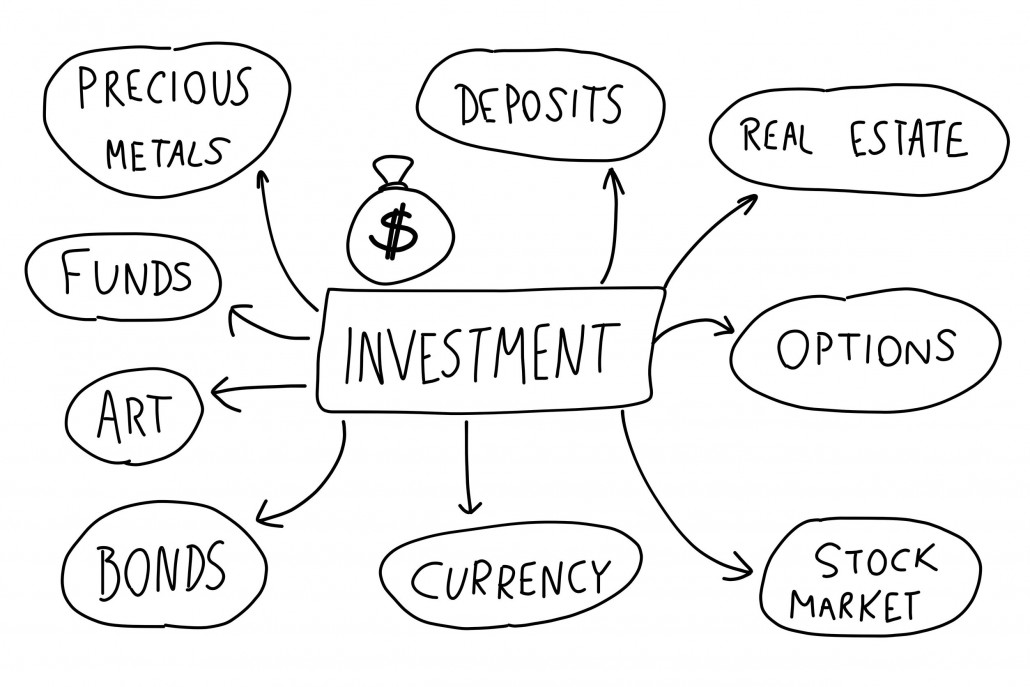
In very simple terms, ‘investment opportunities’ refer to the avenues that you can use to invest your spare cash. There are many different types of investment opportunities available, depending on your risk appetite and your understanding of the various investment instruments.
Sometimes, people invest in instruments that are related to their personal interests. For example, artworks may not be conventional investment opportunities to most people but to those who understand this market, it may potentially turn out to lucrative investments.
In the next section, we will explore the various investment opportunities to most people.
Stock Market
Chances are, you probably have heard of investing in the stock market or maybe, you have even invested before in stocks.
Essentially, the stock market is a ‘market’ for investors/traders to buy and sell stocks of publicly traded companies. Nowadays, buying and selling can be done electronically via a click of a button.
In most developed countries, there are established stock exchanges for investors to buy or sell their stocks. In Singapore for example, investors trade stocks via the Singapore Stock Exchange. Sometimes, investors are also allowed to buy stocks that are traded in the stock exchanges of other countries.
For most people, investing in the stock market is one of the most conventional ways for them to invest, since it is widely accessible to most people and stock market news is widely publicized in most medias.
Though stock prices do tend to move in tandem with the underlying companies’ fundamentals in the long run, in the short run, factors such as demand and supply tend to influence the short-term price movement of stocks.
One of the keys to investing successfully in the stock market is to be able to identify winning stocks of profitable companies which are exhibiting favorable price action patterns.
Currency
Another common investment instrument that is getting more popular is that of currency trading or Forex (Foreign Exchange) trading. Forex trading is essentially buying or selling a country’s currency, depending on whether you believe the value of the currency would rise or fall.
Compared to the stock market, the currency market is potentially more volatile and the volume of trading is higher. Unlike the stock market, the currency market is open for trading 24/7, during the weekdays.
One key difference between investing in stocks and Forex is that most Forex brokers tend to offer more leverage for retail investors. Like most cases, leverage is potentially a double-edged sword and it is strongly advisable that you exercise due diligence before investing in any leveraged instruments.
Commodity
You probably might have heard of investors trading gold. However, gold is only one of the instruments available for trading in the commodities market. Some of the more common commodities traded include precious metals such as gold and silver, crude oil and even agricultural produces, such as wheat and sugar.
Countries such as Russia, Brazil and the Middle-East that are rich in commodity reserves, are some of the most actively traded centers for commodities. However, commodity trading is also conducted globally through a wide network of traders, brokers and investors.
Though there is a high volume of trading in the commodities market, this investment opportunity is predominantly an avenue for seasoned investors, and it is not used extensively by new investors.
Bonds, Fixed Income
Government & corporate bond and, treasuries are one of the investment instruments that are widely used by most professional and retail investors across the world.
When you invest in a bond of a company for example, you are essentially loaning money to the company. In return, the company will pay you interest regularly and when the bond matures (which is usually stated when the bond is issued), the company will pay you back the principal or the amount that was loan originally.
The popularity in bond investments stems from the idea that bonds are touted as ‘low risk’ instruments. Indeed, compared to stock prices, bond prices tend to be less volatile in generally. Some investors also prefer to invest in bonds primarily because of they receive a steady stream of income (from the interest payments).
In some developed countries such as Singapore, bonds investments are easily accessible to retail investors.
Real Estate
Investors investing in real estate, often do so for a couple of reasons. Some investors invest in real estate in order to enjoy the passive income from the rentals they collect regularly. Others invest in real estate, primarily because they believe the real estate will appreciate in value over time.
In some countries, investors are able to highly leveraged their real estate investments. And like most leveraged investments, it could potentially work in their favor by magnifying their returns or it could easily wipe out the value of their investments.
Unlike to the stock market, real estate investments are generally less liquid (i.e. you can’t buy or a sell a piece of property quickly) and real estate transactions tend to take time.
Managed Funds
Some investors prefer to delegate investing by parking their money with investment funds that are managed by fund managers because these investors may have limited time to manage their investments.
There are a wide selection of investment funds available in the market today. Some funds invest in more ‘low risk’ instruments such as bonds and fixed income while some may invest in ‘higher risk’ instruments such as start-up companies.
Before investing in any managed funds, you may want to take into consideration whether your risk appetite is congruent with that of the investment fund, the historical performance of the fund as well as the fees associated with investing in the funds.
Art Work, Collectibles
This perhaps is one of the most unconventional investment opportunities available and if can potentially generate very lucrative returns if you understand the market well.
One thing to note though is that the market for unconventional investments may not be as huge or as liquid as conventional instruments like the stock market. Hence, it may not be easy for the owner of a piece of artwork for example, to find a buyer readily. Thus, it is possible that owner’s cash could be ‘locked up’ in the piece of artwork for a long time.
If you are interested in learning ways to grow your wealth, we welcome you to join us for a free 3 hour financial and investment workshop today.
About your author

Team Wealth Academy is a dynamic team who strongly believes in promoting financial literacy to everyone. Founded in 2004, the team has successfully organized the widely acclaimed Wealth Academy™ Program regularly for more than a decade now.


Other articles you might be interested:
 https://www.wealthacademyglobal.com/wp-content/uploads/2017/07/Risk-management-knob.jpg
4000
4000
ferris
https://www.wealthacademyglobal.com/wp-content/uploads/2019/02/WA-Logo.png
ferris2018-05-22 18:42:102018-05-22 18:42:10Is Investing Risky?
https://www.wealthacademyglobal.com/wp-content/uploads/2017/07/Risk-management-knob.jpg
4000
4000
Wealthacademy@akltg.com Marketing Team
https://www.wealthacademyglobal.com/wp-content/uploads/2019/02/WA-Logo.png
Wealthacademy@akltg.com Marketing Team2017-07-03 16:50:072017-07-03 16:50:07Is Investing Risky?
https://www.wealthacademyglobal.com/wp-content/uploads/2017/07/Risk-management-knob.jpg
4000
4000
ferris
https://www.wealthacademyglobal.com/wp-content/uploads/2019/02/WA-Logo.png
ferris2018-05-22 18:42:102018-05-22 18:42:10Is Investing Risky?
https://www.wealthacademyglobal.com/wp-content/uploads/2017/07/Risk-management-knob.jpg
4000
4000
Wealthacademy@akltg.com Marketing Team
https://www.wealthacademyglobal.com/wp-content/uploads/2019/02/WA-Logo.png
Wealthacademy@akltg.com Marketing Team2017-07-03 16:50:072017-07-03 16:50:07Is Investing Risky? https://www.wealthacademyglobal.com/wp-content/uploads/2016/12/wealth-inequality.jpg
1000
2000
Wealthacademy@akltg.com Marketing Team
https://www.wealthacademyglobal.com/wp-content/uploads/2019/02/WA-Logo.png
Wealthacademy@akltg.com Marketing Team2016-12-08 14:53:452016-12-27 15:34:15Rising Wealth Inequality And Why It Should Concern You?
https://www.wealthacademyglobal.com/wp-content/uploads/2016/12/wealth-inequality.jpg
1000
2000
Wealthacademy@akltg.com Marketing Team
https://www.wealthacademyglobal.com/wp-content/uploads/2019/02/WA-Logo.png
Wealthacademy@akltg.com Marketing Team2016-12-08 14:53:452016-12-27 15:34:15Rising Wealth Inequality And Why It Should Concern You? https://www.wealthacademyglobal.com/wp-content/uploads/2016/10/captain-America-vs-Iron-Man.jpg
1440
2560
Wealthacademy@akltg.com Marketing Team
https://www.wealthacademyglobal.com/wp-content/uploads/2019/02/WA-Logo.png
Wealthacademy@akltg.com Marketing Team2016-10-14 21:43:372016-12-27 14:53:095 Highly Effective Ways To Grow And Bulletproof Your Wealth (Part 2)
https://www.wealthacademyglobal.com/wp-content/uploads/2016/10/captain-America-vs-Iron-Man.jpg
1440
2560
Wealthacademy@akltg.com Marketing Team
https://www.wealthacademyglobal.com/wp-content/uploads/2019/02/WA-Logo.png
Wealthacademy@akltg.com Marketing Team2016-10-14 21:43:372016-12-27 14:53:095 Highly Effective Ways To Grow And Bulletproof Your Wealth (Part 2) https://www.wealthacademyglobal.com/wp-content/uploads/2016/12/businessman-with-shield.jpg
3728
5592
Wealthacademy@akltg.com Marketing Team
https://www.wealthacademyglobal.com/wp-content/uploads/2019/02/WA-Logo.png
Wealthacademy@akltg.com Marketing Team2016-08-15 17:34:232016-12-23 23:00:215 Highly Effective Ways To Grow And Bulletproof Your Wealth (Part 1)
https://www.wealthacademyglobal.com/wp-content/uploads/2016/12/businessman-with-shield.jpg
3728
5592
Wealthacademy@akltg.com Marketing Team
https://www.wealthacademyglobal.com/wp-content/uploads/2019/02/WA-Logo.png
Wealthacademy@akltg.com Marketing Team2016-08-15 17:34:232016-12-23 23:00:215 Highly Effective Ways To Grow And Bulletproof Your Wealth (Part 1) https://www.wealthacademyglobal.com/wp-content/uploads/2016/07/single-way-1.jpg
2717
4315
Wealthacademy@akltg.com Marketing Team
https://www.wealthacademyglobal.com/wp-content/uploads/2019/02/WA-Logo.png
Wealthacademy@akltg.com Marketing Team2016-07-18 13:17:012016-12-23 23:17:25The Single Most Effective Way To Become Wealthy
https://www.wealthacademyglobal.com/wp-content/uploads/2016/07/single-way-1.jpg
2717
4315
Wealthacademy@akltg.com Marketing Team
https://www.wealthacademyglobal.com/wp-content/uploads/2019/02/WA-Logo.png
Wealthacademy@akltg.com Marketing Team2016-07-18 13:17:012016-12-23 23:17:25The Single Most Effective Way To Become Wealthy https://www.wealthacademyglobal.com/wp-content/uploads/2016/06/upgrade.jpg
3456
5184
Adam Khoo
https://www.wealthacademyglobal.com/wp-content/uploads/2019/02/WA-Logo.png
Adam Khoo2016-06-20 19:22:502016-12-23 23:33:44When Was The Last Time You Upgraded Yourself?
https://www.wealthacademyglobal.com/wp-content/uploads/2016/06/upgrade.jpg
3456
5184
Adam Khoo
https://www.wealthacademyglobal.com/wp-content/uploads/2019/02/WA-Logo.png
Adam Khoo2016-06-20 19:22:502016-12-23 23:33:44When Was The Last Time You Upgraded Yourself? https://www.wealthacademyglobal.com/wp-content/uploads/2016/12/burnout-2.jpg
3000
4000
Wealthacademy@akltg.com Marketing Team
https://www.wealthacademyglobal.com/wp-content/uploads/2019/02/WA-Logo.png
Wealthacademy@akltg.com Marketing Team2016-06-07 10:28:502016-12-23 23:53:08Are You Stressed Out By Your Current Job?
https://www.wealthacademyglobal.com/wp-content/uploads/2016/12/burnout-2.jpg
3000
4000
Wealthacademy@akltg.com Marketing Team
https://www.wealthacademyglobal.com/wp-content/uploads/2019/02/WA-Logo.png
Wealthacademy@akltg.com Marketing Team2016-06-07 10:28:502016-12-23 23:53:08Are You Stressed Out By Your Current Job? https://www.wealthacademyglobal.com/wp-content/uploads/2016/05/mind.jpg
600
1200
Adam Khoo
https://www.wealthacademyglobal.com/wp-content/uploads/2019/02/WA-Logo.png
Adam Khoo2016-05-09 15:13:162016-12-24 00:34:00Are You Programming Your Mind to Succeed or to Fail?
https://www.wealthacademyglobal.com/wp-content/uploads/2016/05/mind.jpg
600
1200
Adam Khoo
https://www.wealthacademyglobal.com/wp-content/uploads/2019/02/WA-Logo.png
Adam Khoo2016-05-09 15:13:162016-12-24 00:34:00Are You Programming Your Mind to Succeed or to Fail?

Leave a Reply
Want to join the discussion?Feel free to contribute!